

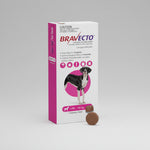

Bravecto 40-56 kg
LE 3,000.00
- 1 Tablet
Bravecto 40-56 kg
Product Description
Bravecto 1400 mg Chewable Tablet for Extra Large Dogs (40–56 kg)
Product Overview
Bravecto is a veterinary prescription (POM-V) chewable tablet for extra large dogs weighing between 40 kg and 56 kg . Manufactured by MSD Animal Health (Merck Animal Health), it provides long-lasting protection against fleas, ticks, and mites with a single dose .
Key Specifications
Key Benefits
Indications for Use
Bravecto is indicated for the treatment and prevention of :
| Parasite Type | Specific Parasites |
|---|---|
| Fleas | Ctenocephalides felis, Ctenocephalides canis |
| Ticks (12 weeks) | Dermacentor variabilis (American dog tick), Haemaphysalis longicornis (Asian longhorned tick), Ixodes scapularis (black-legged tick), Rhipicephalus sanguineus (brown dog tick), Ixodes ricinus, Ixodes hexagonus, Dermacentor reticulatus |
| Mites | Demodex spp. (demodicosis), Sarcoptes spp. (sarcoptic mange), Otodectes spp. (ear mites) |
Additional Indications:
-
Can be used as part of a treatment strategy for Flea Allergy Dermatitis (FAD)
-
Reduces the risk of Babesia canis (babesiosis) transmission by ticks
-
Prevents Dipylidium caninum (tapeworm) transmission from infected fleas for 3 months
Dosage and Administration
| Dog Weight | Tablet Strength | Package Color |
|---|---|---|
| 2 – 4.5 kg | 112.5 mg | Yellow |
| > 4.5 – 10 kg | 250 mg | Orange |
| > 10 – 20 kg | 500 mg | Green |
| > 20 – 40 kg | 1000 mg | Blue |
| 40 – 56 kg | 1400 mg | Pink |
Administration Instructions:
-
Administer orally with food for maximum effectiveness (food increases bioavailability)
-
The chewable tablet should not be broken or divided
-
Can be mixed with food or given by hand
-
Dogs over 56 kg should receive a combination of tablets that most closely matches body weight
Safety Information
Contraindications:
-
Do not use in puppies less than 8 weeks of age or weighing less than 2 kg
-
Do not use in case of hypersensitivity to fluralaner or any excipients
Warnings and Precautions:
-
Use with caution in dogs with a history of seizures or neurological disorders
-
Fluralaner belongs to the isoxazoline class, which has been associated with neurological adverse reactions including tremors, ataxia, and seizures
-
Fleas and ticks must attach to the host and commence feeding to be exposed to the active substance
Adverse Reactions
Common adverse reactions observed in clinical field studies :
| Frequency | Adverse Reactions |
|---|---|
| Common (≥1%) | Vomiting (7.1%), Decreased appetite (6.7%), Lethargy (5.4%), Diarrhea (4.9%) |
| Rare (<0.01%) | Convulsions, ataxia, muscle tremor, pruritus, alopecia, hypersalivation, hemorrhagic diarrhea |
Most reported adverse reactions were self-limiting and of short duration .
